
What this Weidian Spreadsheet is
This Weidian Spreadsheet is a wall of product cards. Open a route and you get rows of cards: a photo, a brand tag, a title translated from what the seller wrote, and a price in Chinese yuan. Tap one and you land on the listing at the marketplace it came from, which is what you hand to a shopping agent.
It runs on a catalogue we maintain ourselves, and it currently carries 27687 listings across 65 routes (our catalogue count, 2026-08-06). Nothing on it is sold by us. We are a shop window with a filing system.
The word sheet is a leftover. Years ago people really did swap finds in shared files, the name stuck, and the thing itself turned into a browsable catalogue with pictures. Nobody is asking you to open a document.
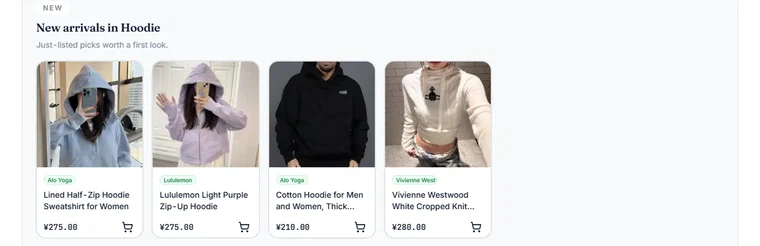
What a card carries, and what it does not prove
Four things sit on every card, and each one means slightly less than a shopper coming from a Western retail site expects it to mean.
The photo belongs to the seller. It shows what they say they are selling. It is not an inspection photo and it is not the item that will be picked for you. The brand tag is how our catalogue filed the listing, which is useful for filtering and is not a statement about authenticity.
The title is machine translated from the seller wording, so it reads a little flat and occasionally lists three variants in one line. The price is what the item costs inside China. Service fee, domestic delivery, international freight and any import charges all come later, and none of them are ours to quote.
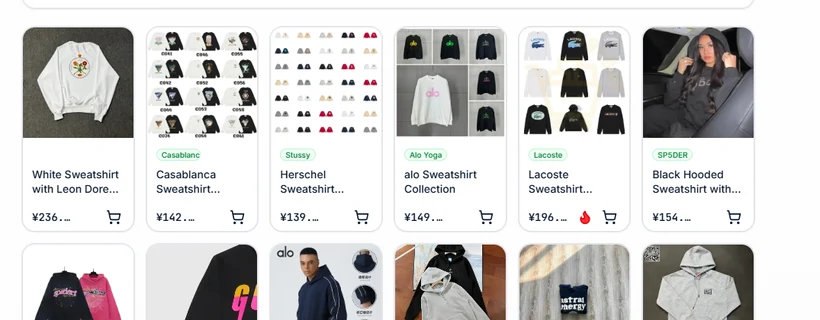
Where the items come from
Weidian is one of several Chinese marketplaces feeding the catalogue. The agent this guide points at states on its own site that it buys from Taobao, Tmall, Weidian, 1688 and Xianyu, which is the second hand marketplace.
That matters when you read a card. A Weidian listing is usually one independent seller with a small shop. A 1688 listing is usually a wholesaler with minimum quantities. Same catalogue, quite different conversations if something needs asking.

Why use the spreadsheet at all
You could browse the Chinese marketplaces directly. Plenty of people do. Here is the honest version of what a curated sheet adds and what it removes from your control.
What the spreadsheet saves you
- Searching in a language you may not read, on apps that assume a Chinese phone number
- Sorting genuine listings from dead shops, which is the slow part
- Guessing which category word a marketplace uses for the thing you want
- Building your own list of links: every card is already agent ready
What you give up
- Breadth. A curated catalogue is a fraction of what the marketplaces hold
- Freshness on thin routes, where one seller changes the whole picture
- Direct contact with the seller before ordering, which goes through the agent instead
- Live stock and price truth: a card is a snapshot, the listing is the fact
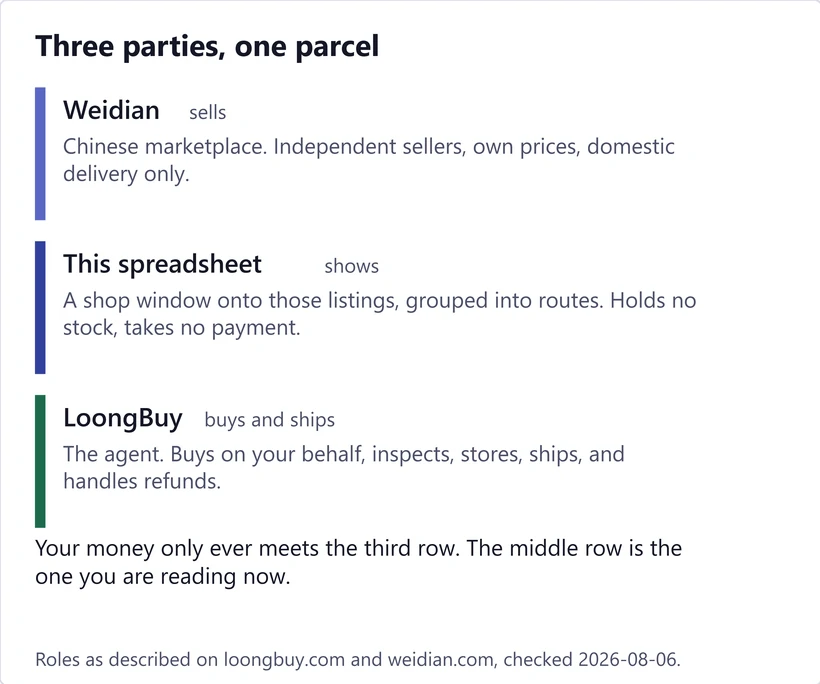
Four jobs the spreadsheet does not do
These come up in email often enough to be worth stating plainly.
It does not hold stock
Every card points at somebody else warehouse. If a listing sells out, the card is stale until the catalogue next reads it.
It does not inspect anything
Inspection happens at the agent warehouse, after purchase, and only within the limits the agent publishes.
It does not track your parcel
The catalogue never sees your order. Tracking lives in the account you opened with the agent.
It does not quote shipping
Freight depends on weight, volume, destination and the line you pick, and those are the agent numbers, not ours.
How to use a card once you have found one
Step by step, the trip from a card to a parcel has five moves, and only the first belongs to this site.
Open the card and check the title rather than the photo. Follow it to the marketplace listing. Copy that link. Paste it into the agent, which is where you choose size and colour from the seller own options. Pay, wait for the warehouse to receive it, then decide when to have it shipped.
The part people underestimate is the third one. A link is portable, an account is not, so it is worth opening the agent account before you have twelve tabs of finds you are trying not to lose.
The browsing page walks through the route controls in detail, and the agent page covers what happens after the link changes hands.